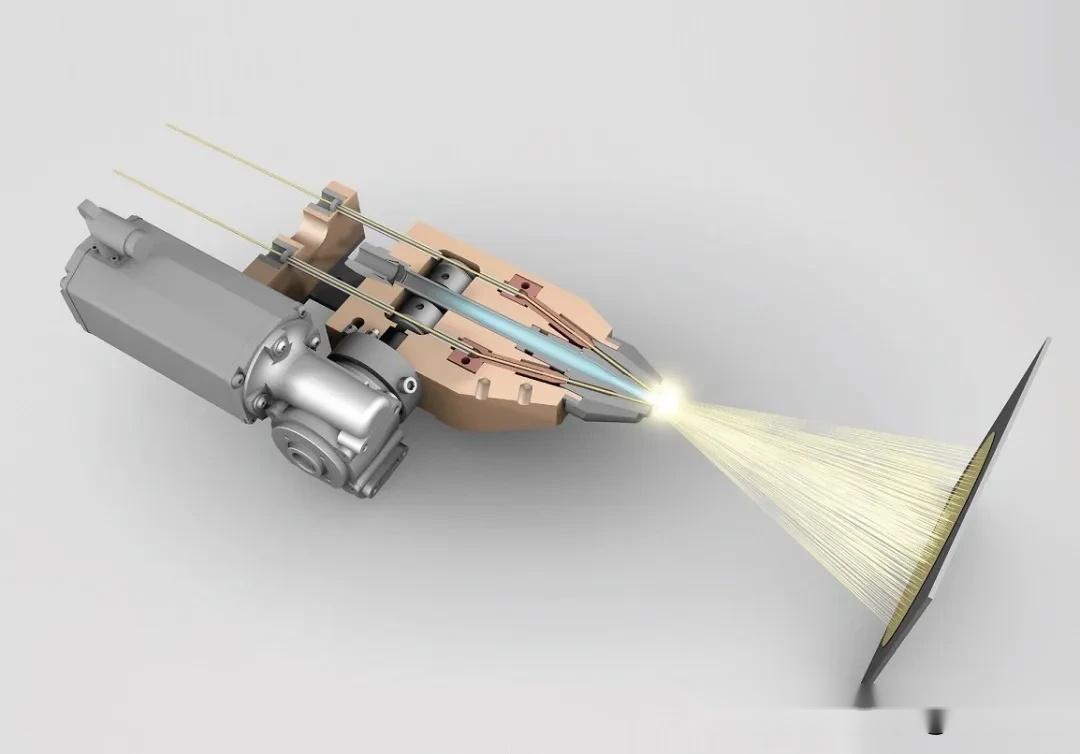
Thermal barrier coatings (TBCs) operate in some of the most aggressive environments in modern manufacturing. Applied to gas turbine blades, aerospace combustors and heavy-duty engine components, a TBC system keeps the underlying metal substrate roughly 100-150 °C cooler.
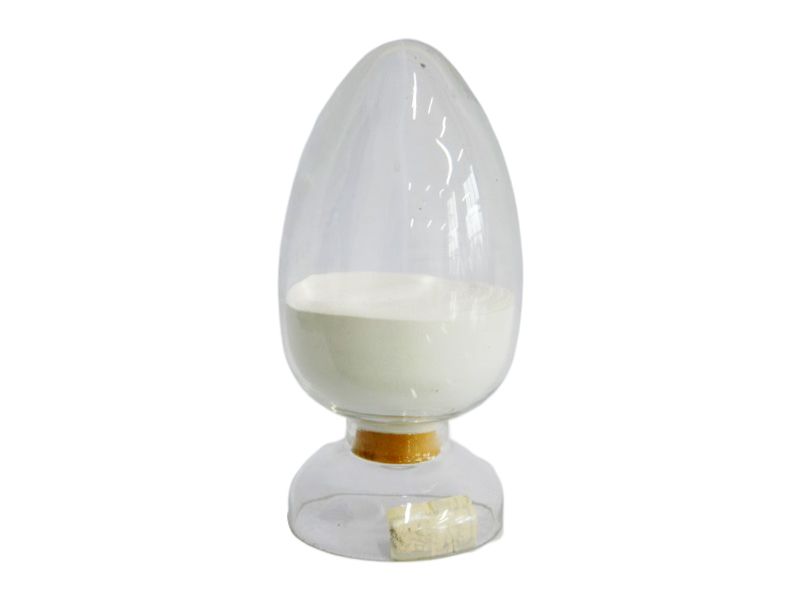
At the heart of an effective ceramic topcoat is yttria-stabilized zirconia (YSZ). Not every YSZ feedstock delivers the same thermal resistance or strain tolerance: the wrong phase composition, particle size distribution or manufacturing morphology shows up later as premature coating spallation under severe thermal cycling.
This guide sets out the parameters an engineering team has to evaluate when specifying YSZ powder for plasma thermal spraying, and what the Qianyou zirconia family actually offers.
1. Yttria concentration: why 7-8 wt% Y₂O₃ is the industry standard
Pure zirconia (ZrO₂) transforms from the monoclinic to the tetragonal phase at about 1170 °C, with a volume change of roughly 4%. That shift cracks the coating during cooling. Stabilizing zirconia with yttria (Y₂O₃) keeps a metastable tetragonal phase (t') across working temperatures up to 1200 °C.
- 7-8 wt% Y₂O₃ (YSZ 8%): the industry standard for thermal barrier performance. It gives maximum toughness, minimal phase degradation and strong thermal shock resistance through rapid heating and cooling.
- Partially vs. fully stabilized (FSZ): fully stabilized zirconia (15-20 wt% Y₂O₃, cubic phase) has a lower thermal conductivity, but its thermal shock resistance is substantially lower than that of partially stabilized 7-8 wt% YSZ, which makes it prone to delamination under cyclic heat load.
Key rule: for high-cycle aerospace or gas turbine hot-section components, specify 7-8 wt% yttria-stabilized zirconia to keep the t' phase.
The Qianyou zirconia family leaves that decision open rather than assuming it: TCR-832 and TCR-832A at 8 wt% Y₂O₃, TCR-836 at 13 wt%, TCR-835 at 20 wt% and TCR-837 at 65 wt%, next to MgO-stabilized TCR-871 (22 wt% MgO), CeO-stabilized TCR-875 (22 wt% CeO) and CaO-stabilized TCR-878 (4 wt% CaO).
2. Particle size distribution vs. deposition efficiency
Particle size governs melting behaviour inside the plasma plume, the density of the deposited splats and the deposition efficiency.
| PSD range | Melting character | Resulting coating structure | Typical application |
|---|---|---|---|
| 15-45 µm | Rapid, complete melting | Dense, low-porosity coatings with a smooth surface finish | Fine internal cooling channels, HVOF and high-velocity APS |
| 45-90 µm | Controlled surface-to-core melting | Micro-cracked, porous microstructure for strong thermal insulation | Standard turbine bucket and blade TBC topcoats |
| 45-125 µm | Coarse feed, high thermal mass | Higher porosity, excellent thermal compliance | Thick thermal barrier coatings on combustor liners |
Too fine (below 15 µm) risks vaporization and nozzle build-up; too coarse (above 125 µm) leaves un-melted inclusions inside the coating and weakens the bond. In the Qianyou zirconia family every grade is supplied in 10-30 µm, 15-45 µm and 45-90 µm ranges, so the plasma ranges above are covered without leaving the catalogue.
3. Powder morphology: agglomerated and sintered vs. fused and crushed
The manufacturing route behind the powder decides how it flows through the feeder and how much internal porosity it carries.
| Agglomerated and sintered (A&S) | Fused and crushed (F&C) |
|---|---|
| Spherical shape, excellent flowability | Angular, dense structure |
| High internal porosity | Zero internal porosity |
| Lower thermal conductivity, preferred for TBC topcoats | High density and abrasion resistance |
- Agglomerated and sintered (A&S): a spray-dried ceramic slurry sintered at high temperature yields round, hollow or semi-porous spheres. A&S powders feed smoothly, give uniform plasma dwell times and a lower thermal conductivity of about 1.0 to 1.5 W/m·K.
- Fused and crushed (F&C): an ingot-melted zirconia crushed into angular grains. F&C powders are denser and cheaper, but they conduct heat better and wear the spray nozzle faster.
For premium TBC performance, agglomerated and sintered powders remain the preferred choice worldwide.
4. Specification checklist for procurement
When YSZ feedstock is quoted, the technical data sheet and the certificate of analysis should state:
- Chemical purity: ZrO₂ + Y₂O₃ ≥ 99.0%, with tight limits on SiO₂ (below 0.1%) and Fe₂O₃ (below 0.05%) so that no low-temperature glass phase can form.
- Phase content: a minimum of 90% metastable tetragonal (t') phase.
- Hall flow rate: below 40 s/50 g, to avoid feed-line blockages during continuous plasma spraying.
- Apparent density: a consistent volumetric packing density between 1.8 and 2.4 g/cm3.
On every grade page of this site the composition, the particle size ranges and the melting point are published, and the grades of a family can be compared side by side in a single table.
Custom YSZ solutions for demanding applications
Choosing the right YSZ thermal spray material means balancing thermal isolation, mechanical toughness and spray economics. Whether the coating goes on a power generation turbine or an aerospace propulsion system, specifying a precise particle distribution such as TCR-832 (8 wt% Y₂O₃, 45-90 µm) keeps the thermal protection dependable. The full zirconia family is listed with compositions and size ranges, and particle size ranges can be adjusted to your spray system — send the spray process, the substrate material and the target coating thickness with your inquiry and the grade will be matched to the quotation.